 Earshot
Covering Earshot
Everything you need to write about Earshot accurately: verified facts, ready-to-use boilerplate, the logo and current screenshots. Questions, review builds or founder interviews: [email protected] — it reaches the founder directly.
Boilerplate
One line. Earshot is an open-source AI meeting notetaker for Windows and Mac that records locally — no bot joins the call — and keeps every recording and note on your own computer.
Short paragraph. Earshot is a privacy-first alternative to cloud AI notetakers like Otter, Fireflies and Granola. It records both sides of any meeting locally on a Windows PC — nothing joins the call — then produces speaker-attributed transcripts, summaries, action items and cited answers. The full desktop app is open source under the MIT licence and free to self-host with your own AI keys (including fully local models, so audio never leaves the machine); Earshot Plus, at US$9/month, runs the transcription and AI with zero setup. Earshot is built independently in Queensland, Australia by developer Hayden Whittle, with no venture funding and a strict no-training policy on user data.
Key facts (verifiable)
- What it is
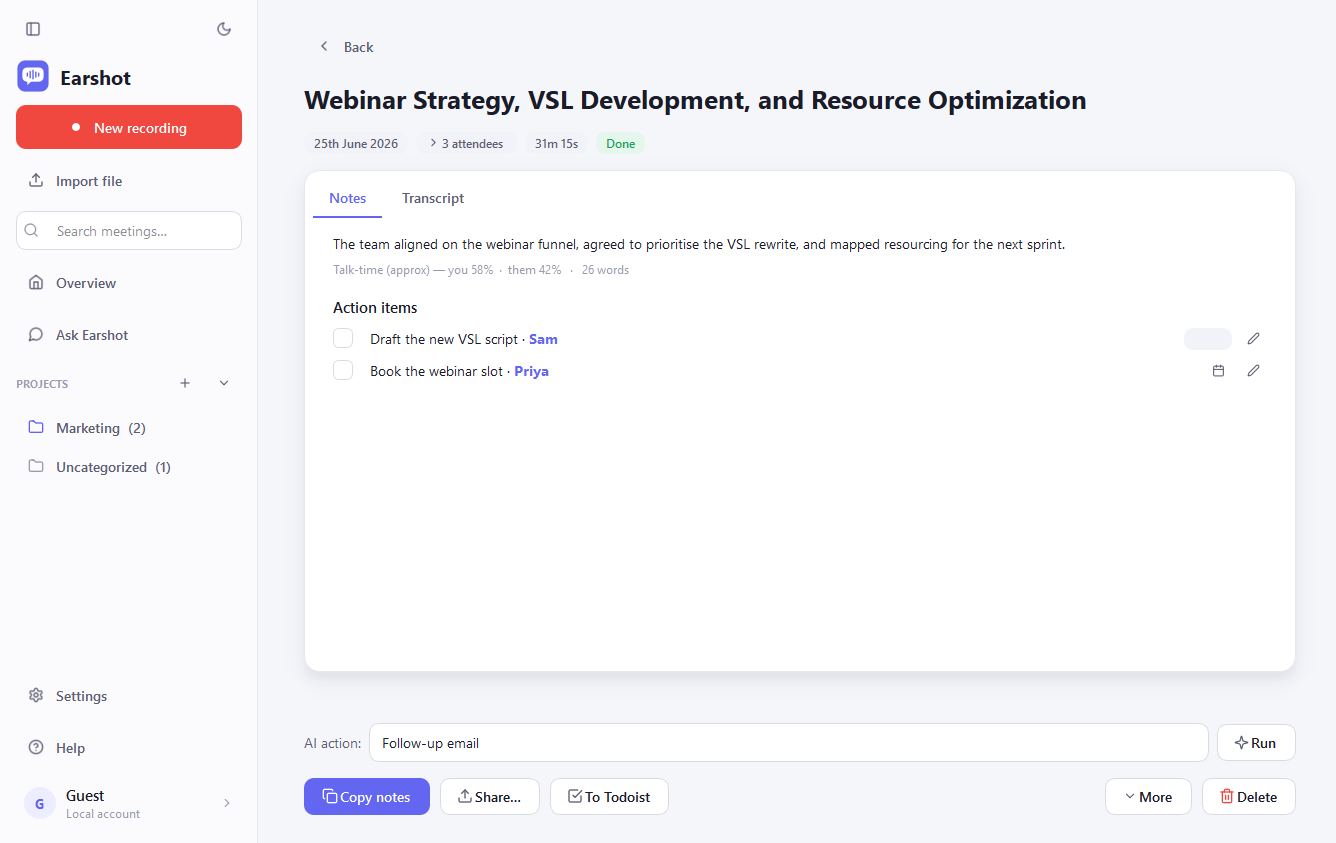
- A local-first AI meeting notetaker for Windows 10/11 and macOS (Apple Silicon): dual-channel recording (your mic and the meeting audio captured separately), Whisper-based transcription, AI notes, action items, and cross-meeting Q&A with verified citations.
- What makes it different
- No bot ever joins the call; recordings and transcripts stay on the user's PC (no vendor cloud copy); the entire desktop app is open source (MIT) on GitHub; users can bring their own AI keys or run fully local models; user content is never used to train AI models.
- Pricing
- Free forever self-hosted (bring your own AI keys). Earshot Plus: US$9/month or US$90/year, managed transcription and AI, 40 hours of meeting audio per month, 7-day free trial, 14-day money-back guarantee.
- Platform
- Windows 10/11 (64-bit) and macOS 14.4+ (Apple Silicon). Works with Zoom, Teams, Meet, Webex, softphones — anything audible on the PC.
- Company
- Earshot App (ABN 28 119 806 160), Queensland, Australia. Founder and developer: Hayden Whittle. Independent — no venture funding. Payments handled by Paddle as merchant of record.
- More detail
- About · fact-checked comparisons vs Otter, Fireflies, Fathom and Granola · FAQ · privacy policy.
Logo and screenshots
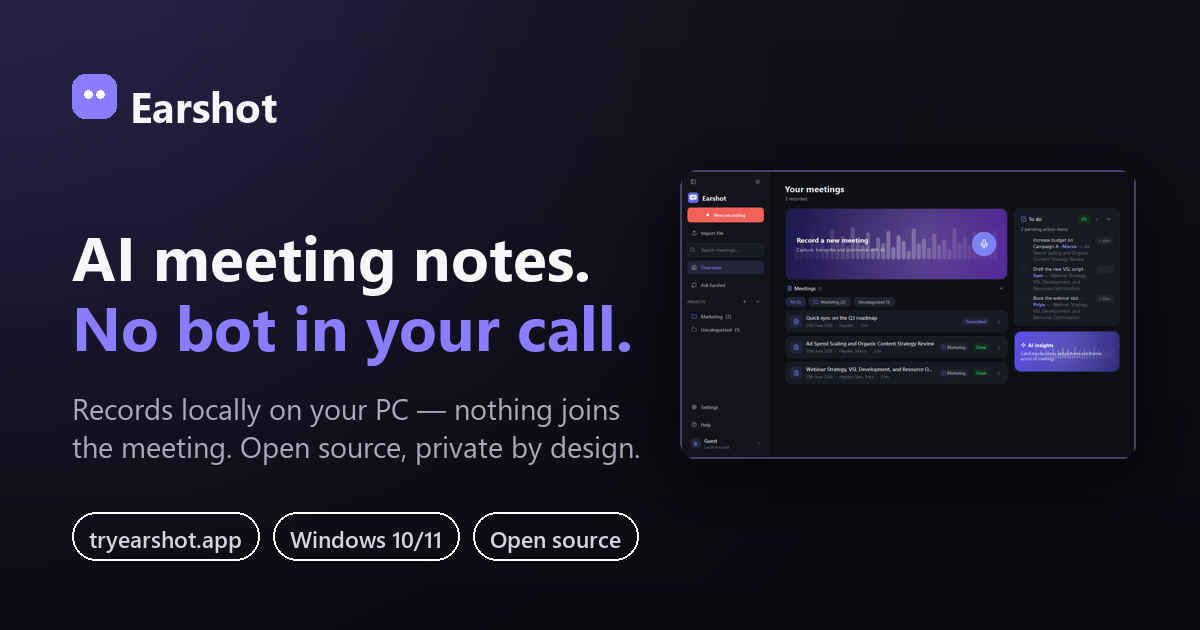
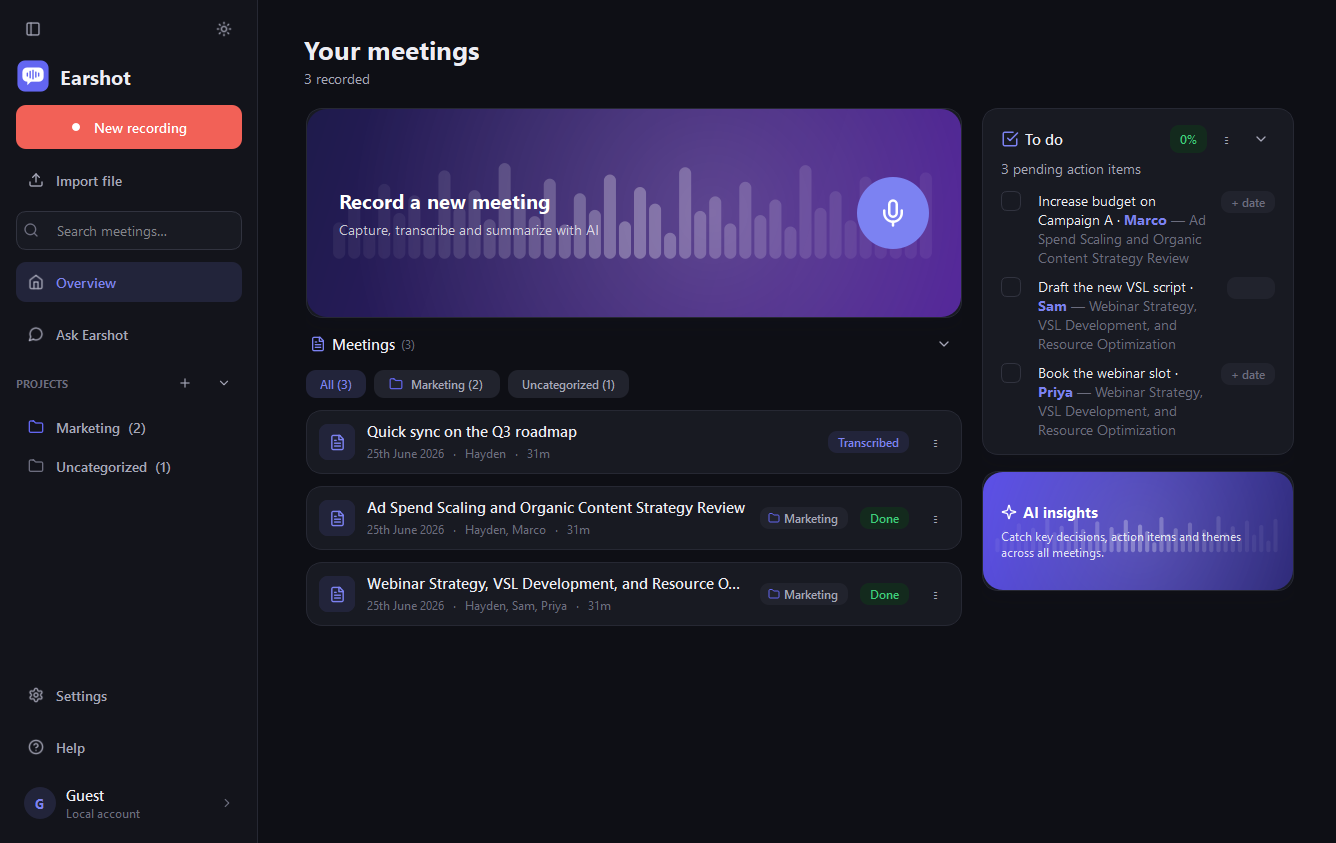
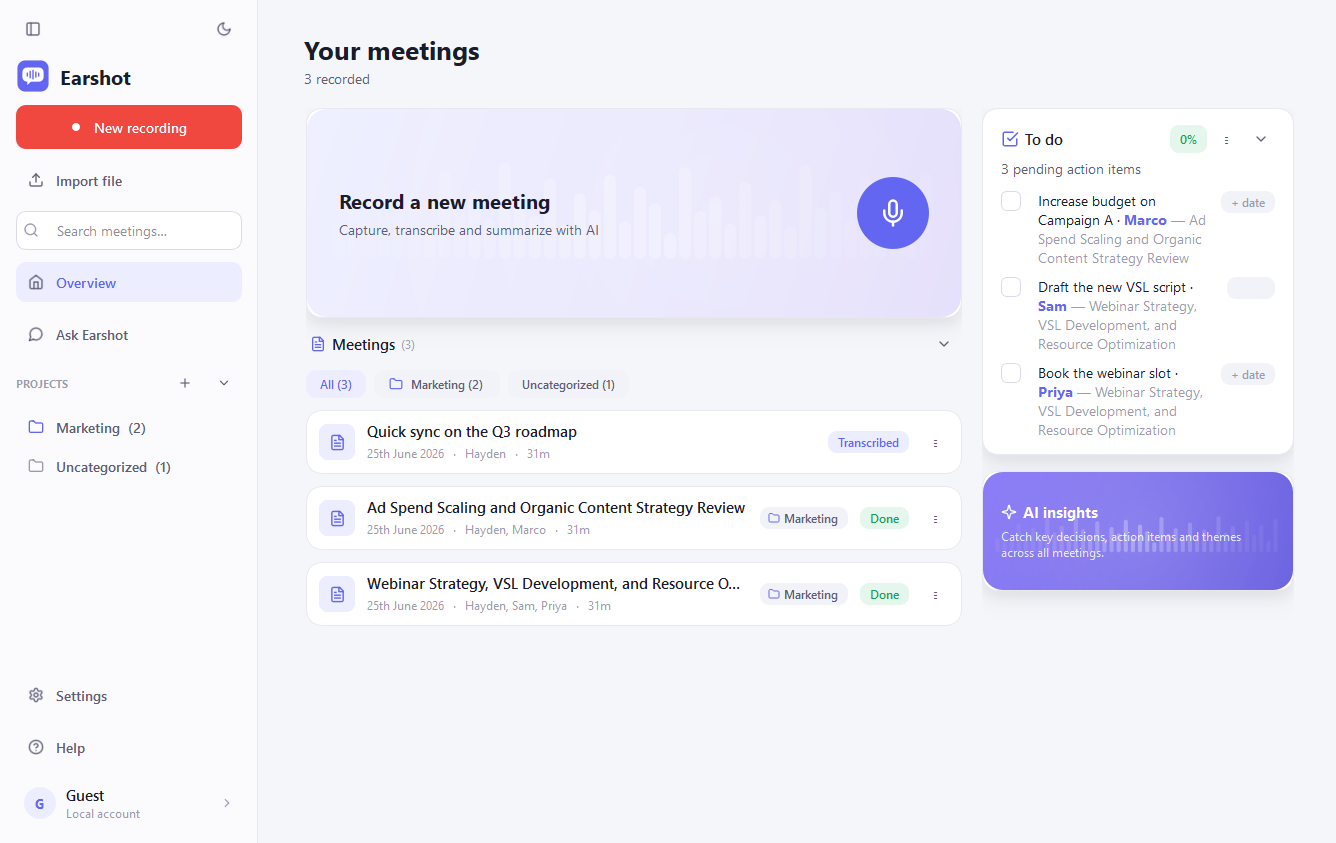
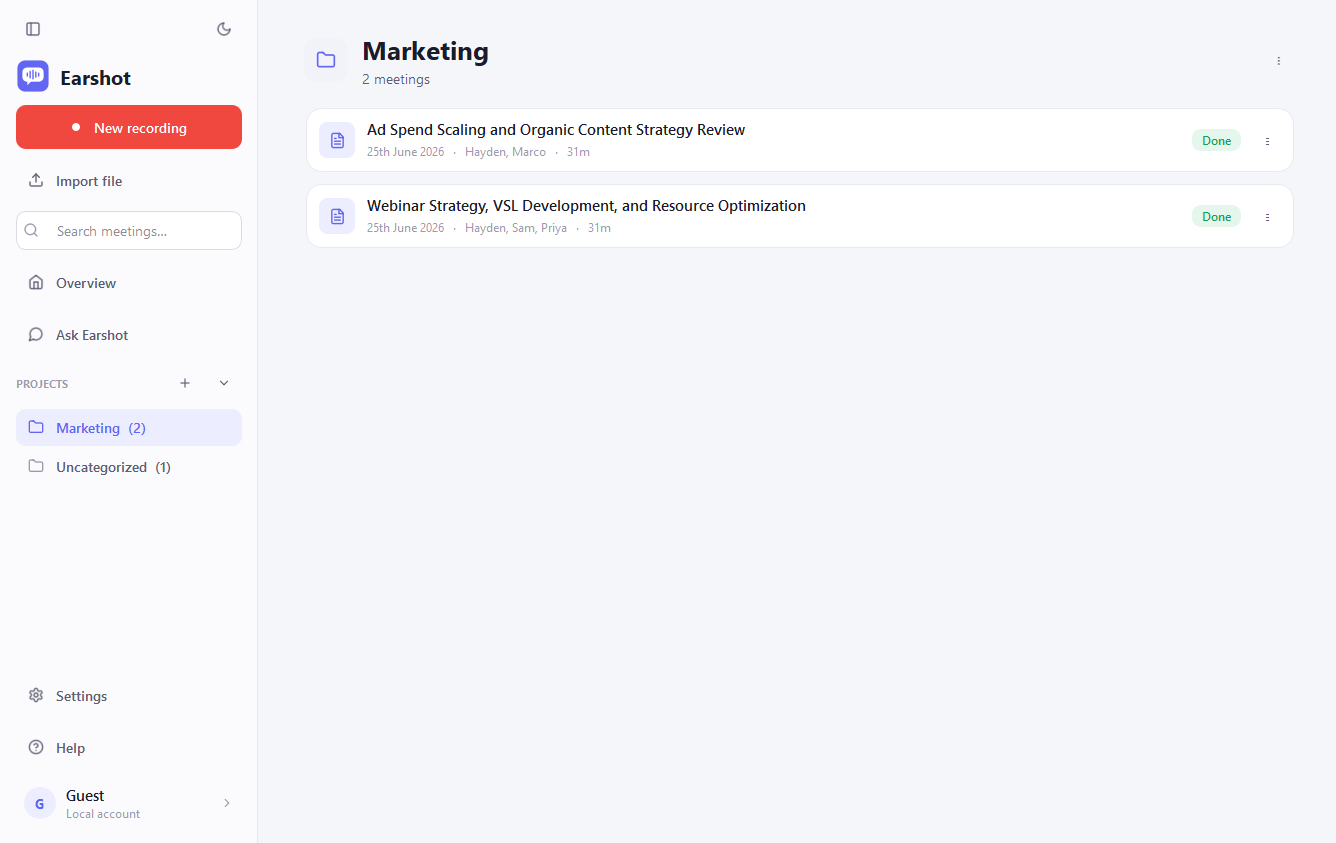
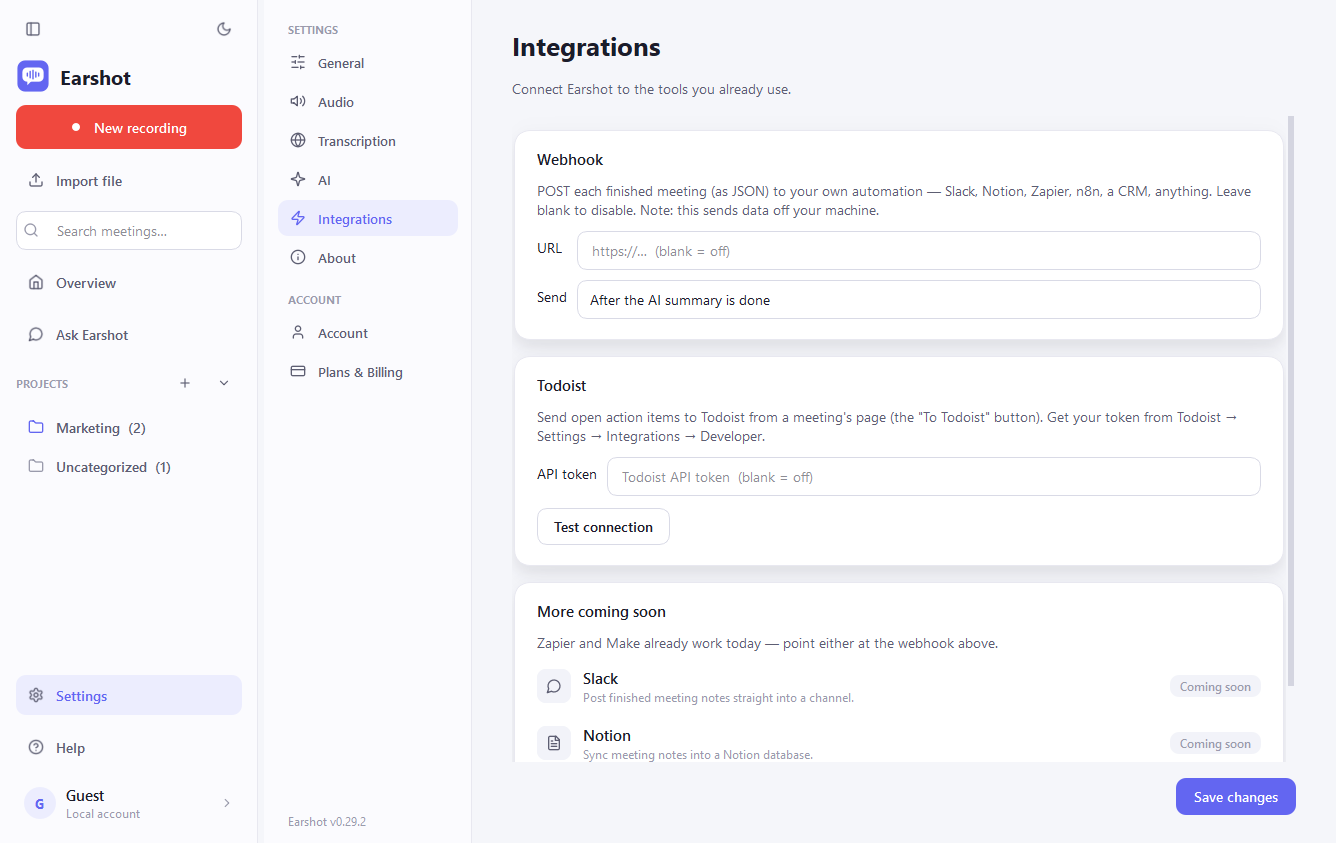
Current app screenshots (v0.29, rendered from seeded demo data — safe to publish) and the logo. Right-click any asset to save it, and please don't stretch, recolour or add effects to the logo.
Story angles that hold up
- The anti-cloud notetaker. Every mainstream AI notetaker stores transcripts in a US cloud; several train their models on user data by default. Earshot is the open-source counter-argument: everything on-device, code you can read.
- One developer vs the venture-backed field. Granola raised nine figures; Earshot is one Australian developer funding development with a $9 subscription and an MIT licence.
- Meetings you don't host. Bot notetakers can't join calls you don't control. Local capture works for anything you can hear — a detail that matters to consultants, lawyers and anyone client-side.
We'd rather you check our claims than repeat them: the comparison pages link to every competitor's official documentation, and the app's behaviour is verifiable from the source.